Manual benders
The lever machines that cover the jobs a press brake cannot be bothered with: cleat benders for HVAC connections, pipe benders for conduit and tube, sheet rollers for cylinders and cones, and bench brakes for small parts. No power, no foundation, no program.
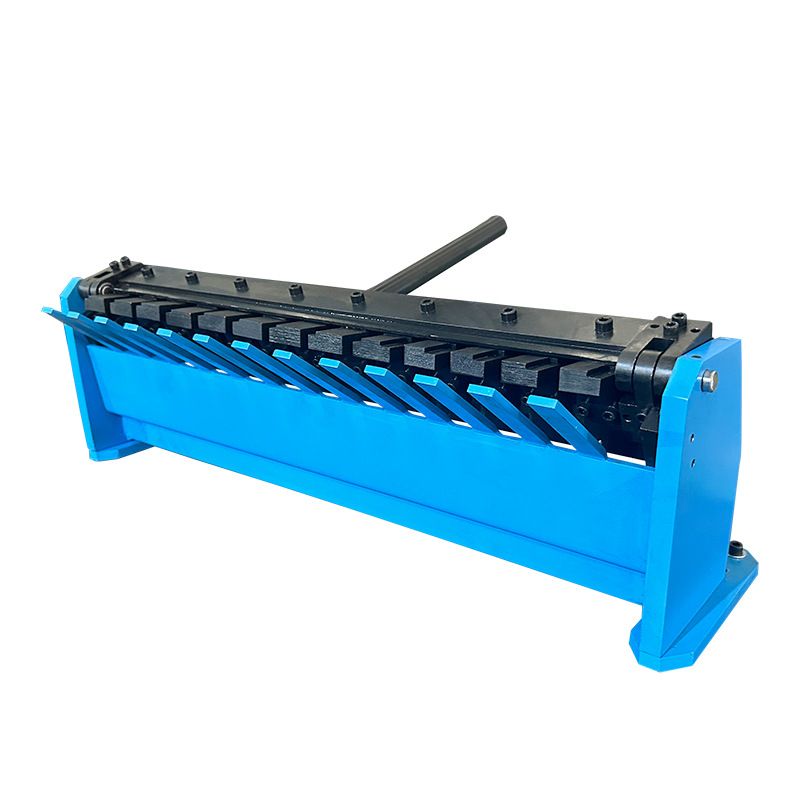
Manual cleat bender — 610 mm
A specialised tool designed for precision fabrication in HVAC ductwork. It plays a critical role in forming S-cleats and C-cleats — essential components for secure and airtight connections in sheet metal duct systems.
- Working width: 610 mm (24 inches) — optimised for standard HVAC duct panels and uniform bending across large surfaces
- Material compatibility: galvanised steel, stainless steel (up to 2 mm) and aluminium sheets commonly used in duct manufacturing
- Bending angle range: 90° to 180° adjustable, enabling precise formation of S and C profiles
- Tool construction: high-carbon steel frame with hardened rollers for durability and wear resistance; ergonomic handle reduces operator fatigue during repetitive tasks
- Weight and portability: ~25 kg (55 lbs), compact for workshop or on-site use
Manual pipe bender
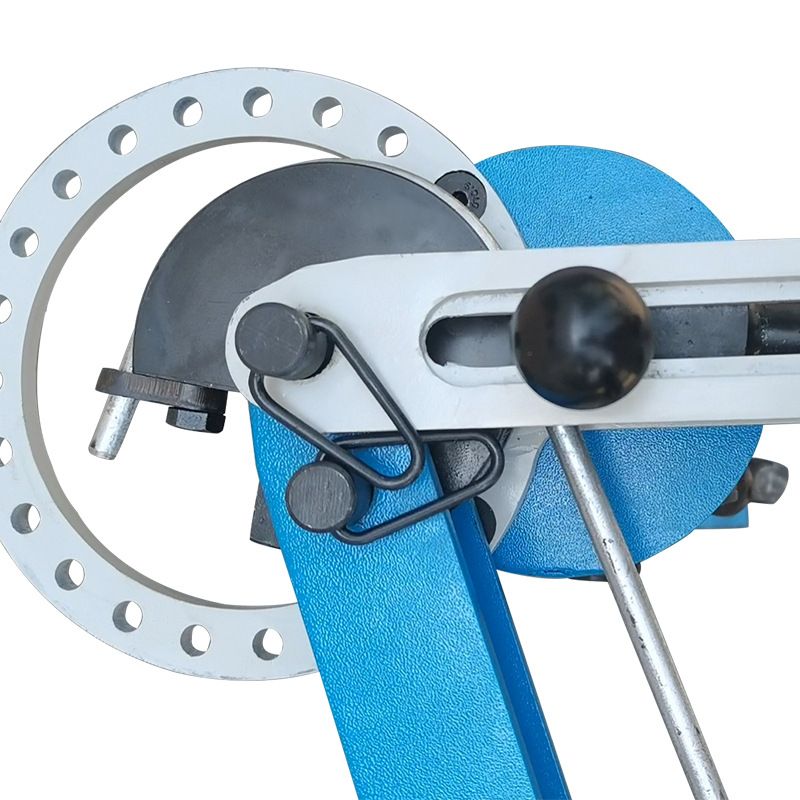
Manual pipe benders employ mechanical force to shape metal pipes into desired angles without requiring heat or filler materials — cold bending that ensures minimal deformation and smooth, consistent curves.
| Parameter | Range |
|---|---|
| Applicable pipe materials | Steel, stainless steel, aluminium, copper, thin-walled galvanised pipe |
| Profiles | Round, square and rectangular |
| Wall thickness | 2.75–4.5 mm (standard applications) |
| Diameter range | 1/2" (13 mm) to 4" (108 mm) — DN15 to DN100 pipe standards |
Manual sheet roller bender
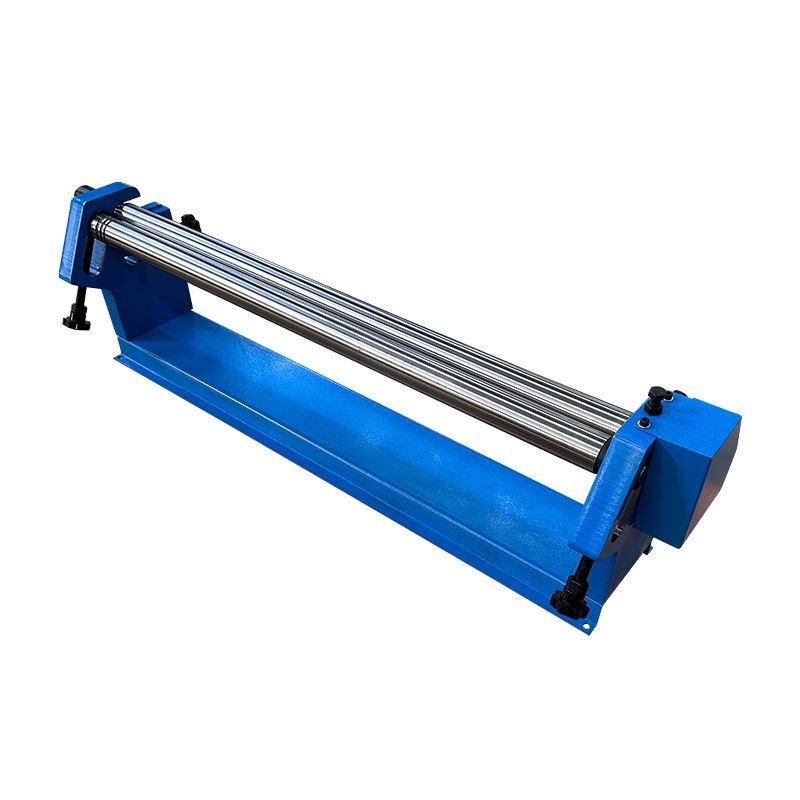
Three or four adjustable rollers gradually curve sheet metal, rods or bars into arcs, cylinders or cones, operated by hand cranks or levers — mechanical leverage instead of power, for low-volume production, prototyping or repairs.
| Material | Max thickness | Max width |
|---|---|---|
| Mild steel | 3 mm (10 gauge) | 1,200 mm |
| Aluminium | 4 mm (6 gauge) | 1,500 mm |
| Stainless steel | 2 mm (12 gauge) | 1,000 mm |
| Copper / brass | 3 mm | 1,000 mm |
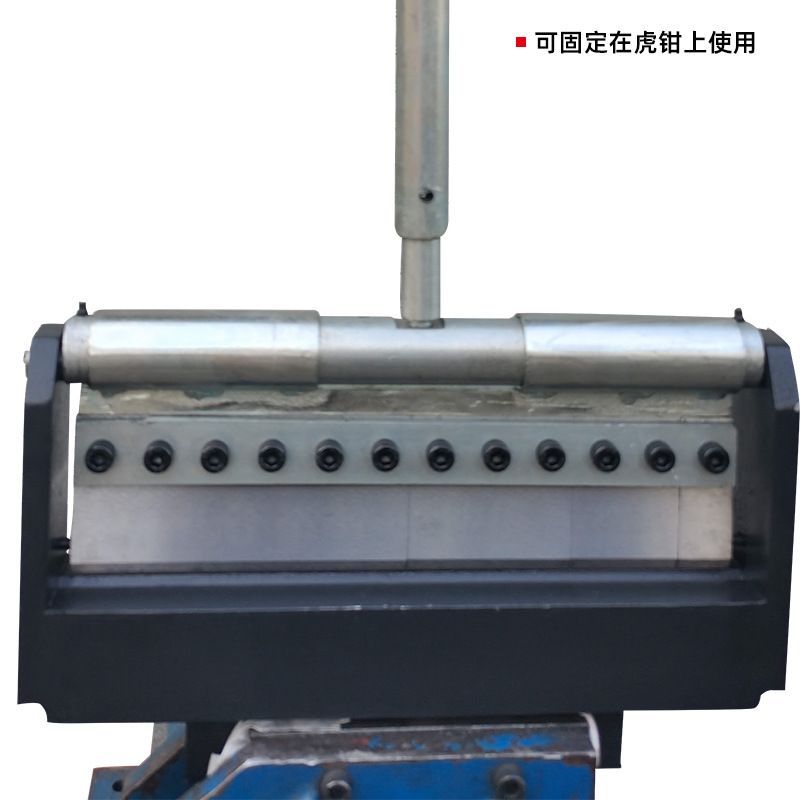
Manual small brake
| Material | Max thickness | Max width |
|---|---|---|
| Mild steel | 1.5 mm (16 gauge) | 600–1,200 mm |
| Aluminium | 2.5 mm (12 gauge) | 600–1,200 mm |
| Stainless steel | 1.0 mm (18 gauge) | 600–1,000 mm |
| Copper / brass | 2.0 mm | 600–1,000 mm |
Manual press brake
Mechanical systems that use manual force to bend metal sheets — operator skill instead of CNC, cost-effective for low-volume projects, with heavy-duty thick steel plate frames that minimise deflection and maintain bending accuracy.
| Model | KECMT-600 | KECMT-1100 | KECMT-1600 |
|---|---|---|---|
| Max bending width | 600 mm | 1,100 mm | 1,600 mm |
| Steel thickness | 1.5 mm | 1.2 mm | 1.0 mm |
| Aluminium thickness | 2.0 mm | 1.8 mm | 1.5 mm |
| Copper thickness | 2.0 mm | 1.8 mm | 1.5 mm |
| Bending angle range | 0–135° | 0–135° | 0–135° |
| Tooling slot width | 32 mm | 32 mm | 32 mm |
| Machine weight | 800 kg | 1,200 kg | 1,500 kg |
- Heavy-duty construction: frame fabricated from thick steel plates for rigidity and stability, minimising deflection and maintaining bending accuracy
- Modular tooling system: compatible with T10 steel moulds hardened through quenching, interchangeable for different bending shapes (90° angles, U-bends)
- Adjustable back gauge: manual or semi-automatic rear stop ensures consistent workpiece positioning for repeatable bends
- Clamping mechanism: leverages mechanical force to secure the material, preventing slippage during bending
Applications
- HVAC: S-cleats and C-cleats for duct connections; duct fittings and enclosures
- Construction: conduit and pipe bends for electrical and hydraulic runs
- Automotive: exhaust and tube work, roll cages, small brackets
- Prototyping and repair: the machine you reach for when the part is one-off
Ask about the manual benders
Send the part you need to bend and we will come back with a configuration and a quote.