Robotic press brake
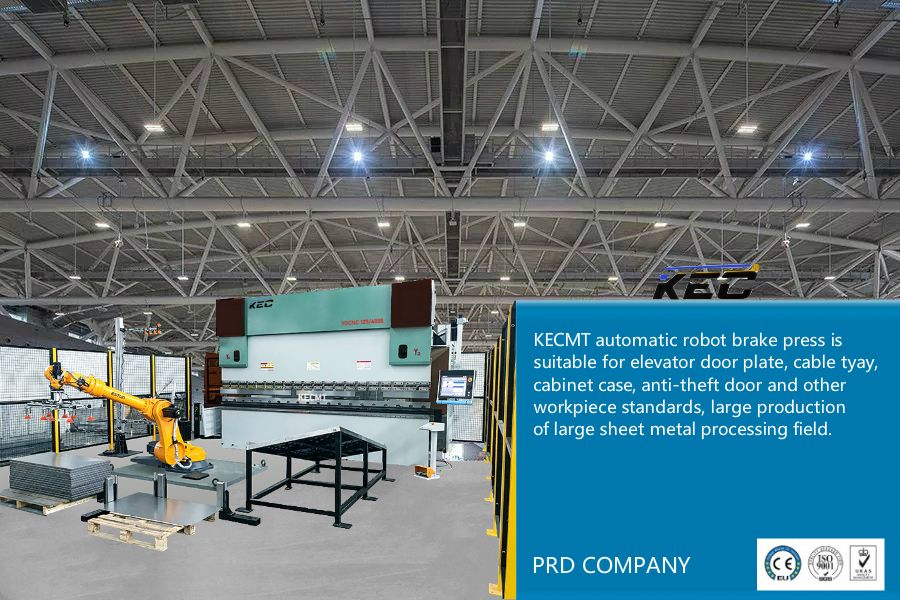
A robotic press brake cell pairs a CNC press brake with a 6-axis robot that loads, positions and unloads the part — so a single operator can run a cell that would otherwise need a feeding team. We build the brake, integrate the robot, and commission the whole cell on your floor.
What a robotic press brake is
Robotic press brakes are revolutionizing metal fabrication by merging advanced robotics with traditional bending processes. These systems enhance precision, speed and adaptability, making them indispensable in industries demanding high accuracy — automotive, aerospace and construction above all.
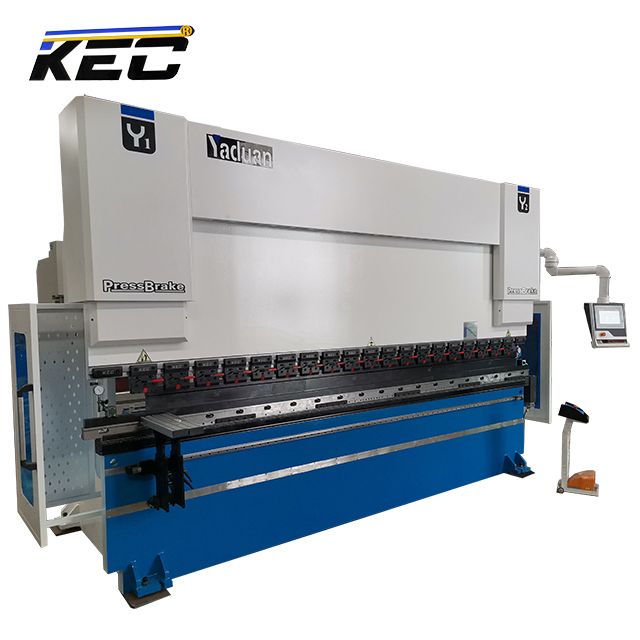
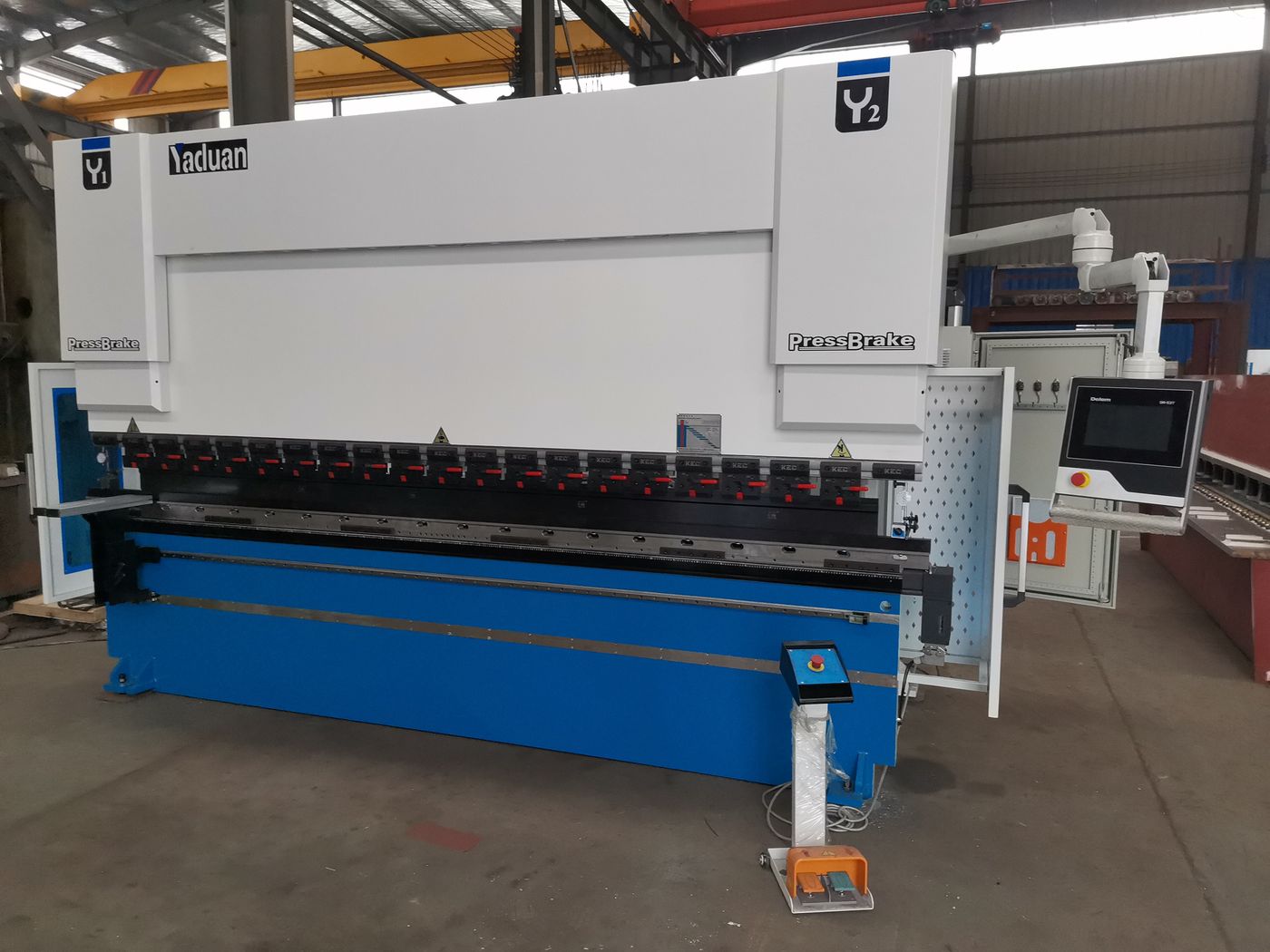
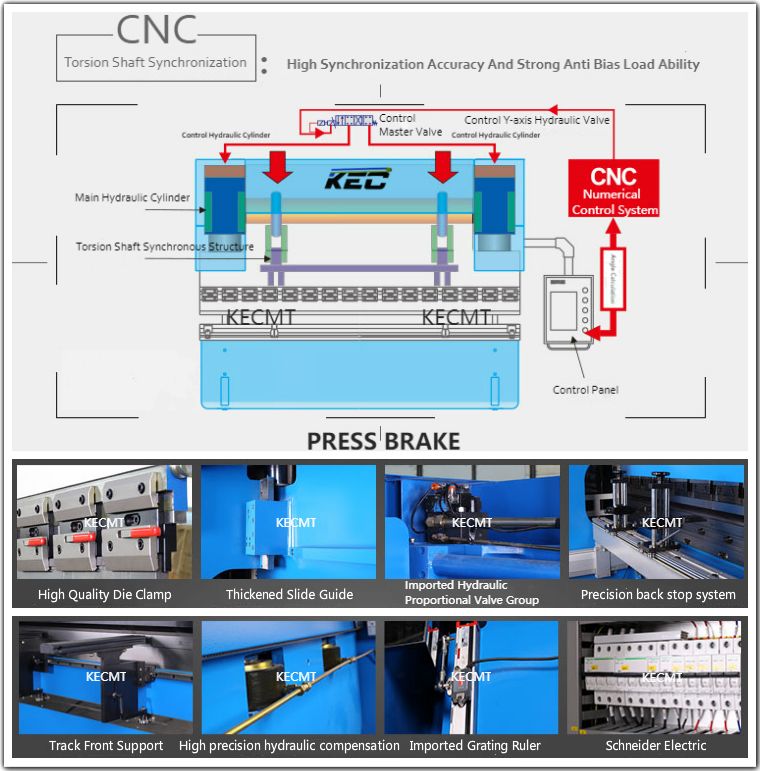
The press brake side of the cell is the machine we already build: a welded steel frame, European hydraulics, and a CNC control that accepts the robot’s part-in-position signal and runs the bend program. The robot side is a 6-axis arm on a floor-mounted track or fixed pedestal, with a gripper suited to your blank — vacuum for coated sheet, mechanical for heavier plate.
Key technical specifications
Robotic arm integration
- Payload capacity: loads up to 20 kg in dual-arm configurations, enough for thick steel sheets in the common thickness range
- Degrees of freedom: 6 axes — advanced dexterity for complex bending operations while simplifying integration with press brake tools
- Repeatability: down to 0.05 mm, ensuring consistent bends — critical for aerospace components requiring ±0.1° angular accuracy
- Motion radius: typically 1,700 mm, sized to the bed length and blank dimensions
Press brake side
- Force range: standard models deliver 100–6,000 kN, accommodating materials from thin aluminium (1 mm) to heavy steel
- Bending speed: high-speed systems achieve 20 mm/s working speed, reducing cycle times substantially against manual operation
- Back gauge: CNC-controlled X, R and Z axes with ball screw drive, receiving the robot’s part-in-place interlock
Tooling and control
- Quick-change tooling: modular designs enable tool swaps in under 2 minutes, enhancing flexibility for small-batch production
- AI-driven adjustments: integrated sensors and vision systems detect material springback, improving accuracy through real-time corrections
- IoT connectivity: cloud-based monitoring tracks machine health, predicting maintenance needs and minimising downtime
Applications across industries
- Automotive: chassis components and EV battery enclosures at high bends-per-hour, with throughput improvements that come from removing the handling steps rather than speeding the ram
- Aerospace: laser-guided presentation ensures tight tolerances for brackets and structural components
- Construction: heavy-duty arms handle long structural sections, optimising large-scale fabrication
- Elevator and cabinet work: panel families with repeated bend sequences — the classic robotic cell workload
Integration with Industry 4.0
Modular tooling adapts the cell to diverse tasks — clamps, grippers and suction cups are swapped like any other tool. Servo-driven positioning on both robot and back gauge reduces waste by keeping every blank presented the same way. Touchscreen controls and CAD/CAM integration streamline programming: the bend program is simulated offline, checked against the robot’s reach envelope, and loaded — cutting setup time dramatically against teach-by-hand.
Honest economics
A robot cell is a capital decision, and it only pays when the part family justifies it. The breakeven case is built on three things: removing operators from the feeding positions, running lights-out for part of the shift, and cutting scrap from consistent presentation. If your volume is a handful of parts a week, we will tell you a manual machine with a good operator is the right buy — we build those too.
What we supply
- The CNC press brake, built and tested in our factory
- The 6-axis robot, gripper and any blank magazine or destacking unit
- Safety fencing, light curtains and interlock logic as one engineered unit
- Offline programming with simulation against your part files
- Commissioning and operator training on your floor
Ask about the robotic press brake
Send the part you need to bend and we will come back with a configuration and a quote.